
FROM CLOSET TO COUTURE: The Bridal Slip Dress Revealed

The Slip Dress: Simple, Elegant and Made for the Modern Bride?
There is something wonderfully timeless about a slip dress. At first glance, it looks almost effortless: delicate straps, a clean neckline, a softly skimming silhouette and beautiful fabric falling close to the body. There is very little decoration, yet somehow the result can be incredibly glamorous. And that is precisely what makes the slip dress such an interesting choice for a bride who wants to make her own wedding dress.
From Lingerie to Bridal Icon
The slip dress has its roots in the simple undergarments traditionally worn beneath dresses, but its transformation into outerwear is a fascinating part of fashion history.
Bias cutting played an important role in its development. Designers such as Madeleine Vionnet explored the possibilities of cutting fabric diagonally across the grain, allowing it to drape, move and follow the contours of the body in a way that a conventional straight-grain garment cannot.

Hollywood helped establish the slip dress as an object of glamour, while the 1990s gave it an entirely different personality. During the rise of Grunge, the once-glamorous slip was stripped back and worn with an intentionally undone, effortless attitude.


That ability to change character is one of the reasons the slip dress has never really disappeared.
It can be glamorous.
It can be minimalist.
It can be romantic.
It can be relaxed.
And, importantly for a bride making her own dress, it can become whatever you want it to be.
Why Does The Slip Dress Work So Well As A Wedding Dress?
The modern bride doesn't necessarily want a dress covered in decoration. She may want the opposite.
A beautiful fabric.
An elegant silhouette.
A dress that moves with her.
Something that feels unmistakably like her. The slip dress does exactly that.

Its simplicity allows the bride to remain the focus rather than the dress overwhelming her. This makes it particularly appealing for a contemporary wedding, whether you're planning a city ceremony, an intimate celebration, a destination wedding or a much larger occasion.
It also gives you enormous freedom to personalise the finished dress.
You might make a completely minimalist silk slip dress and let the fabric do all the work. Or you could add lace. Perhaps a sheer overlay. Maybe delicate beading or embroidery.
You could wear it with a dramatic veil, a detachable train, a beautiful jacket or an oversized bow.

The basic silhouette becomes your starting point rather than your finished idea.
The Beauty of Making Your Own Slip Dress
There is another reason we love the slip dress for sewing. Because the design is relatively simple, the details become incredibly important. When there aren't lots of seams, panels and embellishments competing for attention, you start to notice the things that really matter in dressmaking:
The fabric.
The fit.
The neckline.
The straps.
The way the garment hangs.
The finishing.
And this is where making your own wedding dress becomes particularly rewarding. You aren't simply choosing a size from a rail and hoping it works. You can make adjustments for your body. You can alter the length. You can refine the bust fit. You can change the neckline. You can adjust the straps. You can make the dress exactly the way you want it. That is one of the great advantages of sewing your own wedding dress: the pattern is the starting point, not the end point.
Bias Cut: Beautiful, But Understand What You're Sewing

Many of the most beautiful slip dresses are cut on the bias. The bias is the diagonal direction of the fabric, at approximately 45 degrees to the warp and weft. Cutting in this direction allows the fabric to drape beautifully and gives the finished garment a fluid, almost liquid quality. But there is a catch. Bias-cut fabric can move and stretch while you are working with it. That means a fabric which looked perfectly behaved when you bought it can behave quite differently once it has been cut. If you're making a bias-cut wedding dress, take your time. Handle the fabric carefully, avoid unnecessary stretching during construction and make sure you understand how your particular fabric behaves before cutting into it. Our Sewing Stretch guide is worth reading if you're working with a fabric that has stretch or movement. And then there's the hem...
There is one particularly important thing to remember with a bias-cut dress.
The Hem May Not Stay Where You Think It Should
Once the dress is hanging from the body, gravity allows the fabric to settle. Different sections of the garment can drop by different amounts because the fabric is hanging in different directions. This is why you should never rush to finish the hem of a bias-cut dress. Once the dress is constructed, allow it to hang — ideally for around 24 hours — before checking and levelling the hem. It is a small detail, but on a simple dress, a beautifully level hem can make all the difference.
Fit Is Everything
A slip dress is designed to skim the body, which means fit becomes particularly important. On a more structured wedding dress, seams, boning, gathers or layers of fabric can help create the final shape. With a slip dress, there is nowhere for poor fit to hide. The good news? You're making it yourself. That means you have the opportunity to make the adjustments that a ready-to-wear dress simply can't provide. A small alteration to the bust can change the way the neckline sits. A change in length can completely alter the proportions of the dress. A carefully adjusted waist or hip measurement can make the difference between a dress that feels uncomfortable and one that feels as though it was made specifically for you — because it was. Before committing to your final fabric, making a toile is one of the best things you can do. It allows you to check the fit, make adjustments and understand how the pattern works with your body before you cut into your precious wedding fabric. Take a look at our Toile Fitting guide for more help with getting the fit right.

Choosing The Right Fabric
The fabric you choose will have a huge influence on the personality of your slip dress.
Silk charmeuse can give you that classic fluid, luxurious drape.
Satin can create a more polished and glamorous finish.
Crepe can provide a slightly more forgiving and sophisticated silhouette.
Lace can transform a simple slip into something romantic.
.And a sheer fabric or lace overlay can add another layer of interest without losing the clean simplicity of the underlying dress. Think about how you want your finished dress to feel as much as how you want it to look:
Do you want something fluid and sensual?
Crisp and contemporary?
Soft and romantic?
Minimal and architectural?
The pattern may be the same starting point, but your choice of fabric can take it in a completely different direction.
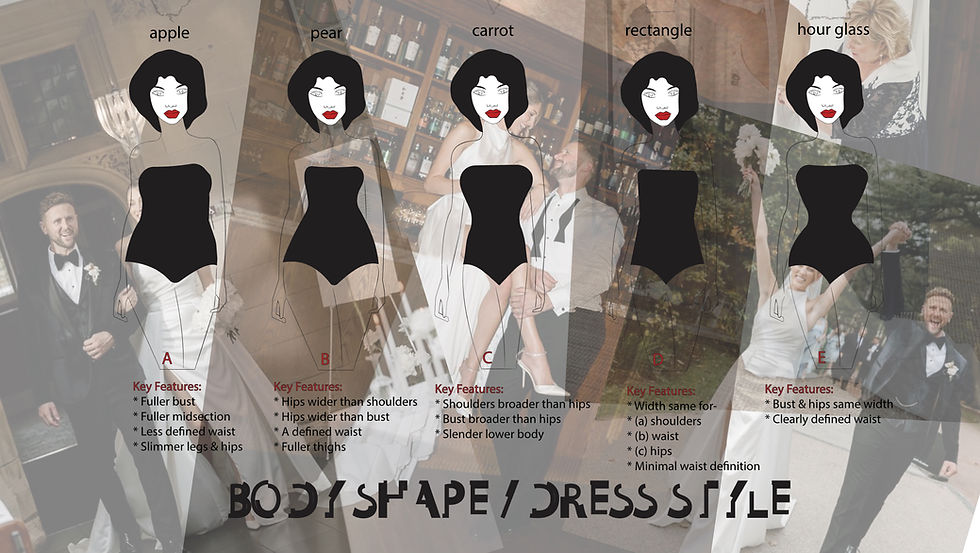
And My Body Type?
The classic bias-cut slip dress primarily flatters hourglass and pear-shaped body types best, but any body type can wear one by choosing the right fabric weight, length, and cut. Here’s a quick easy to follow breakdown:
Hourglass & Pear:
Traditional bias-cut silk or satin naturally follows curves, hugging the waist and hips fluidly.
Petite:
Midi lengths hitting just below the knee and V-necklines prevent the fabric from overwhelming shorter frames.
Athletic / Banana:
Cowl necklines or lace-trimmed bodices add soft dimension, while bias cuts create subtle curves.
Apple / Round:
Heavier satin or matte fabrics skim the body instead of clinging tightly, creating a smooth, gliding silhouette.
Plus-Size:
Styles with adjustable straps, empire waistlines, and mid-weight matte fabrics offer support and reduce sharp light reflection.
Take a look at our Body Shape/Dress Style guide for more information on your body type.
A Dress You Can Make Completely Your Own
Perhaps the greatest attraction of making a slip dress for your wedding is its potential for customisation. Start with the classic silhouette and then ask yourself: What Would Make This Dress Mine?
Maybe it's a low back.
Maybe it's delicate lace around the neckline.
Maybe it's a longer length and a dramatic train.
Maybe it's a sheer overdress that can be removed after the ceremony.
Maybe it's a simple silk dress worn with a statement veil.
Or perhaps you love the dress exactly as it is and don't want to add anything at all. There is no right answer. The simplicity of the slip dress gives you the freedom to decide.
Why We Keep Coming Back To The Slip Dress
Fashion changes constantly, but the slip dress keeps returning.
Its appeal isn't really about a particular decade or trend. It's about good design.
Beautiful proportions.
Beautiful fabric.
A flattering line.
And a dress that allows the person wearing it to remain the centre of attention.
For a dressmaker, it is also an opportunity to concentrate on the fundamentals of making a beautiful garment: choosing the right fabric, understanding bias cutting, creating a good fit and taking care with the finishing.
And for a bride who is considering making her own wedding dress, those fundamentals can make the process incredibly satisfying. Because making your own wedding dress isn't simply about saving money or creating something different. It's about being able to say: I Made This. And when the dress is as beautifully simple as a classic slip dress, every detail — every seam, every fitting adjustment, every carefully finished edge — becomes part of the story. Sometimes the simplest dress really is the most beautiful.

Ready to make your own?
Explore the VJ Seamsters Maria bridal slip dress sewing pattern HERE and start creating a wedding dress that is uniquely yours.


Comments